Tuesday, December 06, 2005

DAILY TELECOM NEWS: Technicians take on new challenges in fiber era

By Luis Galarza

Business & Industry Watch.- The ongoing switch from copper to fiber has reduced the need to have a large number of technicians working in the field and also has raised the bar for people seeking work in the telecom industry. Many of today's telecom workers have a high degree of technical proficiency in areas such as electronics and engineering -- a trend that reflects the complexity of new technologies driving change in the industry. More about this at: The New York Times

For anybody who wants to jump on a new telecom business venture, I'll recommend to get your technicians on countries from Central and South America, their up to date with technology, they work hadder for less (a lot less), and they can get train for less at their own countries. If Microsoft get programmers from Ecuador why not you...

10% Off Holiday Sale on Computer Products at eComputerDeals.us.tf

DAILY NEWS: WWP raises $25.5M in funding round

By Luis Galarza

Business & Industry Watch.- World Wide Packets, a company that sells fiber-optic infrastructure to municipalities, has brought in an additional $25.5 million in VC funding. The new round brings WWP's total funding to about $140 million. For more information about this topic visit: Red Herring, Light Reading

Hope they use this funding the right way on their business...

Compare communication service prices at Cognigen.better.ws

DAILY NEWS: NTL may buy part of Virgin Mobile

By Luis Galarza

Business & Industry Watch.- British cable operator NTL is in talks to buy Virgin Mobile's British business. The deal, which values Virgin at about $1.4 billion, could be announced this week. Virgin Mobile USA would continue operating separately. For more about this topic go to: The New Yorker, The Scotsman (Edinburgh)

Looks like the UK don't want American's to own their biggest players in the telecommunication market in that country. You can also visit Cognigen.better.ws to compare regular and prepaid cell phones, they have the best deals on the net for the US.

Get the best deals on Prepaid Cell Phones cards

DAILY NEWS: Verizon Directory Unit For Sale...

By Luis Galarza

Verizon Communications announced plans to either spin off or sell its directory unit, a strategy that indicates the company wants to focus more on its Internet and TV businesses. A sale could bring in as much as $17 billion.

I don't blame them, specialy now that their Residential and Business DSL Service include a Yahoo or MSN Plus account at no extra charge. Also, they given new residential customers a full year of DSL service for only $14.95/Month, this promotion is getting a lot of people sign up, taken market from their biggest competitor "Comcast". Click here to check who's offering the best deal on DSL, Broadband, T1, T3, or faster.


Compare communication prices at www.cognigen.better.ws

Tuesday, October 25, 2005

Disposable Cell Phones: Use and Then To The Trash...


By Luis Galarza


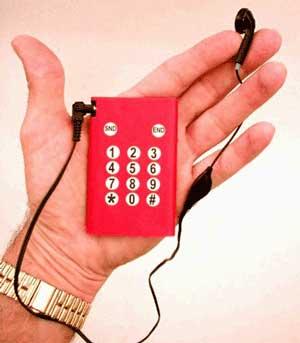
Today I was browsing for new things and gadgets, and I found out that Randi Altschul, a toy designer from New Jersey has invented the first Disposable Cell Phones that can be use for 2 or 3 hours and then to the trash can. Looks like Verizon will be providering the wireless service for these phones.

I don't know you guys, but disposable cell phones??? I think they better do some research before jumping on this new venture.

To learn more about this disposable cell phones and learn how they work, just click here.


Compare, Shop, and Save on all your telecommunication needs, like: Domain names, web hosting, web design, and more. Also get the best deals on computer products and office supplies.

Permission is granted to use this article on your site. The author's byline must be included and all links must be hyperlinked.

Cingular lays groundwork for 3G future


By Luis Galarza

Cingular Wireless is taking a cautious approach to its 3G rollout, but it may have some big moves up its sleeve. The carrier has laid the groundwork for eventually launching converged 3G services via its HSDPA network and is also mulling some killer applications, such as point-to-point video conferencing.


Compare, Shop, and Save on all your telecommunication needs, like: Domain names, web hosting, web design, and more. Also get the best deals on computer products and office supplies.

Permission is granted to use this article on your site. The author's byline must be included and all links must be hyperlinked.

Nextel Partners shareholders approve Sprint Nextel buyout


By Luis Galarza

Netxel Partners shareholders yesterday voted in favor of exercising a put option that will result in Sprint Nextel buying the 68.6% of Partners it doesn't already own. The companies still are wrangling over how much Partners is worth.


Compare, Shop, and Save on all your telecommunication needs, like: Domain names, web hosting, web design, and more. Also get the best deals on computer products and office supplies.

Permission is granted to use this article on your site. Theauthor's byline must be included and all links must be hyperlinked.

Skype grows at faster clip


By Luis Galarza

Skype Technologies said it is adding new subscribers at a pace of approximately 170,000 per day, up from about 150,000 per day until September. The company also said it has launched Skype Groups, a new business-oriented service that lets companies set up Skype accounts for employees with one bill for the group.

Copyright by Telecommunicate.blogspot.com

Ericsson to buy Marconi's telecom equipment business

By Luis Galarza

Ericsson said it has struck a deal to buy Marconi's telecom gear operation for $2.1 billion. The deal will enhance Ericsson's ability to keep pace with rivals such as Alcatel and will give Marconi cash to fund its ailing pension plan.

Copyright by Telecommunicate.blogspot.com

Thursday, September 08, 2005

Articles: A Look Back In Search History

By Luis Galarza, Telecommunication Advisor


Internet Articles -- History buffs will be interested to see a simple but fairly detailed chart of the history of search engines dating back to the development of ARCHIE in 1990. The chart has only eight entries between 1990 and mid 1993, but things start to pick up in March of '93 when Bill Clinton sent the first email message.

According to the chart, Yahoo! was released days after the release of WebCrawler in April 1994. Two months later, Lycos began sorting the web. Within two years, another dozen search tools joined the original 3.

The chart provides a nostalgic look at the history of search engines.


Compare, Shop, and Save on all your telecommunication needs, like: Domain names, web hosting, web design, and more. Also get the best deals on computer products and office supplies, you can customize your own Gateway, MCpc, or Systemax system for less.


Permission is granted to use this article on your site. The
author's byline must be included and all links must be hyperlinked.


Daily News: AJAX: The New Web Revolution

By Luis Galarza, Telecommunication Advisor

Internet News -- Recent innovations in web design are ushering in a new era for internet-based software applications. That’s giving software developers a wide open platform for creating new programs that have no relation to the underlying operating system that runs a PC. Meaning less reloading, faster navigation.

Evidence of this evolution has been popping up everywhere in recent months, with examples that include Google's online map rendering software and its Gmail service, Amazon's A9 search engine and NetFlix's DVD rental platform. All highlight a dramatic rethinking of web applications, using a programming technique dubbed AJAX (for asynchronous JavaScript and XML) that significantly improves how web pages interact with data, for the first time rivaling programs that run natively on the desktop.

GOOGLE MAPS


A9 AMAZONE SEARCH


"For a user it is fundamentally different -- it feels like a real application," said Rael Dornfest, chief technology officer for O'Reilly Media.

AJAX overcomes a severe limitation in traditional web interfaces, which must reload anytime they try to call up new data. By contrast, AJAX lets users manipulate data without clicking through to a new page, Dornfest said. That's putting an end to page refreshes and other interruptions that have handicapped wweb-based applications until now.

Web developers are creating AJAX code libraries and conventions to ease the burden of making applications that speak several computer languages. Even Microsoft is jumping into the game, albeit with hooks that aim to keep it tethered to its Windows OS. The company recently announced it is developing its own AJAX toolbox, called Atlas, for web developers who use Microsoft's ASP.NET technologies to build websites.

Perhaps the best known example of AJAX is Google Maps, whose improbable drop shadows and absurdly movable maps spread shock and awe among web developers in February.

Jesse James Garrett, a co-founder of the Adaptive Path consulting firm gave AJAX its name in an influential essay.

"The deep trend here is that we are really starting to figure out what the web is good for," he explained in an interview with some Tech publications. "This is the web coming into its own as a medium for software applications."

According to Garrett, designers of the first generation of web applications relied on the model of desktop software, and then dumbed them down to fit in a browser. Gmail, the Google webmail service released last year, awakened Garrett and many others to the possibility of a new style of web applications.

"Everyone thought the story of web user interface for e-mail ended in 1999," Garrett said. "Then Google comes along five years later and says 'There is more we can do here,' and demonstrated it in an uncompromising way -- not relying on Flash but simply using browser-native technologies and pushing them as far as they can go."

While Microsoft wants to be part of the AJAX revolution, its major focus for developers is on helping them build lively, multimedia Windows desktop applications for its next operating systems.

To that end, Microsoft included a user interface development tool called Windows Presentation Foundation (formerly codenamed Avalon) in last week's release of a small batch of test versions of Vista, its long-delayed successor to Windows XP.

Atlas, Microsoft's AJAX equivalent, won't likely be shown to web developers before the company's developer conference in September.

Microsoft said "We recognize the need in certain scenarios for browser-based, standards-based stuff and that’s where we have ATLAS technology, which is going to simplify the development of AJAX content," Key said, "But when you are talking about richness and fullness and really doing amazing things that approach cinematic user interfaces, you are going to need a richer technology, and that’s what Windows Presentation Foundation is all about."

Experts say they don't expect AJAX will make desktop applications obsolete. But it has already affirmed the viability of the web as a standalone software development platform.


Compare, Shop, and Save on all your telecommunication needs, like: Domain names, web hosting, web design, and more. Also get the best deals on computer products and office supplies, you can customize your own Gateway, MCpc, or Systemax system for less.


Permission is granted to use this article on your site. The
author's byline must be included and all links must be hyperlinked.


Daily News: How Cell Phone Radiation Function

By Luis Galarza, Cheap Telecom Services


Cell Phone News -- Just by their basic operation, cell phones have to emit a small amount of electromagnetic radiation. As you know cell phones emit signals via radio waves, which are comprised of radio-frequency (RF) energy, a form of electromagnetic radiation.

There's a lot of talk in the news these days about whether or not cell phones emit enough radiation to cause adverse health effects. The concern is that cell phones are often placed close to or against the head during use, which puts the radiation in direct contact with the tissue in the head. There's evidence supporting both sides of the argument.

In this article, we will further explore this controversial issue. You'll find out how cell phones generate radiation and how they are tested for radiation levels.

Source of Radiation
When talking on a cell phone, a transmitter takes the sound of your voice and encodes it onto a continuous sine wave. A sine wave is just a type of continuously varying wave that radiates out from the antenna and fluctuates evenly through space. Sine waves are measured in terms of frequency, which is the number of times a wave oscillates up and down per second. Once the encoded sound has been placed on the sine wave, the transmitter sends the signal to the antenna, which then sends the signal out.


Radiation in cell phones is generated in the transmitter and emitted through the antenna.


Cell phones have low-power transmitters in them. Most car phones have a transmitter power of 3 watts. A handheld cell phone operates on about 0.75 to 1 watt of power. The position of a transmitter inside a phone varies depending on the manufacturer, but it is usually in close proximity to the phone's antenna. The radio waves that send the encoded signal are made up of electromagnetic radiation propagated by the antenna. The function of an antenna in any radio transmitter is to launch the radio waves into space; in the case of cell phones, these waves are picked up by a receiver in the cell-phone tower.

Electromagnetic radiation is made up of waves of electric and magnetic energy moving at the speed of light, according to the Federal Communications Commission (FCC). All electromagnetic energy falls somewhere on the electromagnetic spectrum, which ranges from extremely low frequency (ELF) radiation to X-rays and gamma rays. Later, you will learn how these levels of radiation affect biological tissue.

When talking on a cell phone, most users place the phone against the head. In this position, there is a good chance that some of the radiation will be absorbed by human tissue. In the next section, we will look at why some scientists believe that cell phones are harmful, and you'll find out what effects these ubiquitous devices may have.


The Potential Health Risks
In the late 1970s, concerns were raised that magnetic fields from power lines were causing leukemia in children. Subsequent epidemiological studies found no connection between cancer and power lines. A more recent health scare related to everyday technology is the potential for radiation damage caused by cell phones. Studies on the issue continue to contradict one another.
All cell phones emit some amount of electromagnetic radiation. Given the close proximity of the phone to the head, it is possible for the radiation to cause some sort of harm to the 118 million cell-phone users in the United States. What is being debated in the scientific and political arenas is just how much radiation is considered unsafe, and if there are any potential long-term effects of cell-phone radiation exposure.

There are two types of electromagnetic radiation:

  • Ionizing radiation - This type of radiation contains enough electromagnetic energy to strip atoms and molecules from the tissue and alter chemical reactions in the body. Gamma rays and X-rays are two forms of ionizing radiation. We know they cause damage, which is why we wear a lead vest when X-rays are taken of our bodies.


  • Non-ionizing radiation - Non-ionizing radiation is typically safe. It causes some heating effect, but usually not enough to cause any type of long-term damage to tissue. Radio-frequency energy, visible light and microwave radiation are considered non-ionizing.


  • On its Web site, the FDA states that "the available scientific evidence does not demonstrate any adverse health effects associated with the use of mobile phones." However, that doesn't mean that the potential for harm doesn't exist. Radiation can damage human tissue if it is exposed to high levels of RF radiation, according to the FCC. RF radiation has the ability to heat human tissue, much like the way microwave ovens heat food. Damage to tissue can be caused by exposure to RF radiation because the body is not equipped to dissipate excessive amounts of heat. The eyes are particularly vulnerable due to the lack of blood flow in that area.


    Cell-phone use continues to rise, which is why scientists and lawmakers are so concerned about the potential risks associated with the devices.


    The added concern with non-ionizing radiation, the type of radiation associated with cell phones, is that it could have long-term effects. Although it may not immediately cause damage to tissue, scientists are still unsure about whether prolonged exposure could create problems. This is an especially sensitive issue today, because more people are using cell phones than ever before. In 1994, there were 16 million cell-phone users in the United States alone. As of July 17, 2001, there were more than 118 million.

    Here are a few illnesses and ailments that have potential links to cell-phone radiation:

  • Cancer

  • Brain tumors

  • Alzheimer's

  • Parkinson's

  • Fatigue

  • Headaches


  • Studies have only muddled the issue. As with most controversial topics, different studies have different results. Some say that cell phones are linked to higher occurrences of cancer and other ailments, while other studies report that cell-phone users have no higher rate of cancer than the population as a whole. No study to date has provided conclusive evidence that cell phones can cause any of these illnesses. However, there are ongoing studies that are examining the issue more closely.

    This Week I'll be posting more articles about the studies and other stuff...


    Compare, Shop, and Save on all your telecommunication needs, like: Domain names, web hosting, web design, and more. Also get the best deals on computer products and office supplies, you can customize your own Gateway, MCpc, or Systemax system for less.


    Permission is granted to use this article on your site. The
    author's byline must be included and all links must be hyperlinked.


    Telecom news

    Telecom Tweets